
How to Clean and Care for Granite Worktops
Simple daily routines, stain removal tips, and how to know when it's time to reseal, from the stone experts at Henderstone.

How to Clean and Maintain Granite Worktops
Learn how to clean granite worktops safely, remove stains and limescale, and tell when your stone needs resealing.
The Ultimate Guide
To clean granite worktops, wipe daily with warm water and a pH-neutral stone cleaner, dry with a microfibre cloth, and avoid acids, bleach, and abrasive pads. Check the seal with a simple water drop test, and reseal when needed, typically every 1 to 5 years depending on your stone.
Granite worktops remain one of the most sought-after features in British kitchens, and it's easy to see why. Beautiful, unique, and naturally durable, granite adds luxury and character to any home.
Because granite is a natural stone, though, it needs a slightly different approach to engineered surfaces like quartz or laminate. The good news is that keeping your worktops looking as good as the day they were installed is straightforward once you know the basics.
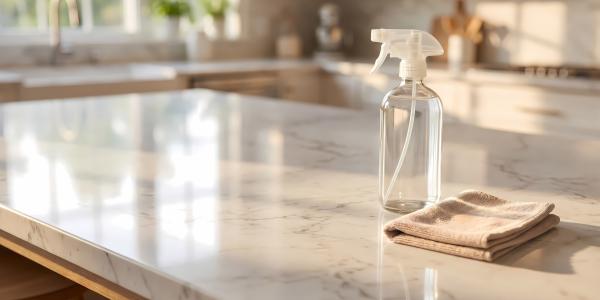
In this guide, we cover your daily cleaning routine, what to avoid, how to deal with spills, stains, and limescale, and how to know when your granite needs resealing.
Note: Every stone is different. Always check any aftercare instructions from your installer or manufacturer, and follow them if they differ from the general advice below.
The Simple 3-Step Daily Routine
For day-to-day care, you don't need expensive chemicals or heavy-duty polish. Three steps will keep your granite looking its best:
- Brush away loose debris. Clear crumbs and dust with a soft, dry microfibre cloth so grit doesn't get dragged across the surface.
- Wash with warm water and a gentle cleaner. We recommend a pH-neutral natural stone cleaner. If you don't have one to hand, a few drops of mild washing-up liquid in warm water will do for occasional use, but avoid products containing citrus extracts, which can dull the sealant over time. Wipe the surface with a damp cloth or non-abrasive sponge.
- Dry and buff. Finish with a clean, dry microfibre cloth, buffing gently in circular motions. This prevents water spots and leaves a streak-free finish.
Once a week or fortnight, use a specialist pH-neutral stone polish spray to boost shine and add a little protection.
What to Avoid When Cleaning Granite
Granite is tough, but its polished finish and protective sealer can be damaged by the wrong products. Steer clear of:
- Harsh chemicals. Bleach, ammonia, glass cleaners, and oven sprays can strip the sealant and leave the stone vulnerable to staining.
- Acidic cleaners. Vinegar, lemon juice, and anything containing citric acid can etch the surface and dull the polish.
- Abrasive tools. Scouring pads, steel wool, and hard-bristled brushes can scratch the finish over time. Stick to soft cloths and gentle sponges.
Everyday Habits That Protect Your Worktops
A few simple habits will do more for your granite than any product:
- Use chopping boards. Granite won't be harmed by a knife, but your knives will be dulled by the granite.
- Use trivets for hot pans. Granite is heat-resistant, but placing a pan straight from the hob can cause thermal shock, particularly near joins and cut-outs, and can damage the sealer. A trivet costs very little and avoids the risk.
- Use coasters for drinks, especially wine, juice, and anything acidic.
- Wipe up spills quickly, as explained below.
How to Handle Spills and Stubborn Stains
Granite has tiny pores that can absorb liquid, so acting quickly is the key to preventing stains.
Blot, don't wipe. If you spill red wine, coffee, tea, or cooking oil, blot the area straight away with kitchen paper. Wiping can spread the liquid and push it further into the stone.
Oil-based stains (butter, cooking oil):
- Mix baking soda with a little warm water to form a thick paste.
- Spread it over the stain, cover with cling film, and tape down the edges.
- Leave overnight to draw out the oil.
- Remove the cling film, wipe away the paste with warm water, and dry.
- Stubborn marks may need a second application.
Organic stains (wine, tea, coffee, juice): For light-coloured granite, a paste of baking soda and a small amount of hydrogen peroxide can help lift discolouration. Peroxide is a mild bleaching agent, so always test on a small, hidden area first, and avoid it on darker granites, where it may cause lightening. For persistent stains, a ready-made stone poultice from a specialist supplier is often the safest option.
If a stain won't shift, don't keep scrubbing. Get in touch and we'll advise on the best next step.
Removing Limescale and Hard Water Marks
If you live in Kent or elsewhere in the South East, you'll know that hard water leaves chalky marks, particularly around taps and sinks. Don't reach for vinegar or standard limescale removers, as most are acidic and will damage granite.
Instead:
- Wipe standing water away after use, especially around the tap and sink.
- Use a limescale remover that is specifically labelled as safe for natural stone.
- Rinse thoroughly and dry with a microfibre cloth.
Can You Disinfect Granite Worktops?
Yes, and it's worth doing after preparing raw meat. Avoid bleach-based and standard antibacterial sprays that aren't labelled as stone-safe. Use a disinfectant designed for natural stone, or check with us for a recommendation. Rinse and dry afterwards.
How to Tell If Your Granite Needs Resealing
Natural granite is micro-porous, meaning it has tiny pores that can absorb liquids. Most worktops are treated with an impregnating sealer that fills these pores and helps repel stains. Over time, that protection naturally wears down, especially in high-use areas.
The Water Drop Test
- Make sure the worktop is clean and dry.
- Place a few drops of plain tap water on the surface. Test several spots, especially near the sink and hob, where wear is heaviest.
- Wait 10 to 15 minutes.
- Check the result:
- Water beads up: the seal is intact.
- The stone darkens beneath the water: moisture is soaking in, and it's time to reseal.
We recommend repeating the test every 6 to 12 months.
How Often Should Granite Be Resealed?
It depends on the stone. Dense, darker granites may only need resealing every 3 to 5 years, while more porous or lighter stones may need it every 1 to 2 years. Some worktops are also treated with long-life sealers. The water drop test is the most reliable guide, and you should always follow your installer's advice.
Can I Reseal Granite Myself?
Many homeowners can, using a high-quality impregnating stone sealer and following the instructions carefully. If your worktops are heavily stained, very porous, or you'd prefer a professional finish, [contact our team] and we can advise or arrange the work.
Quick Reference Maintenance Guide
Task | How Often | Recommended Method |
Daily cleaning | Every day | Warm water, pH-neutral stone cleaner, soft microfibre cloth |
Spill clean-up | Immediately | Blot with kitchen paper, then clean as normal |
Deep polish | Weekly or fortnightly | pH-neutral stone polish spray |
Water drop test | Every 6 to 12 months | Plain tap water on a clean, dry surface |
Resealing | Every 1 to 5 years, depending on the stone | High-quality impregnating stone sealer |
Frequently Asked Questions
Can I use vinegar on granite?
No. Vinegar is acidic and can etch the surface, dulling the polish and weakening the sealer.
Can I use baby wipes or antibacterial spray on granite?
Occasionally is fine for baby wipes if they're alcohol-free and gentle, but they aren't ideal for regular use. Only use antibacterial sprays that are labelled as safe for natural stone.
Can I put hot pans on granite?
Granite is heat-resistant, but we recommend always using a trivet. Sudden temperature changes can cause cracking and damage the sealer.
How do I remove water marks around the tap?
Wipe the area dry after use, and use a stone-safe limescale remover for any buildup. Avoid vinegar and acidic descalers.
Does granite need sealing?
Yes, in most cases. Granite is naturally porous, and a sealer helps protect it from staining. Use the water drop test to check when it's due.
How do I make granite shine again?
Clean thoroughly, dry, and buff with a microfibre cloth. A pH-neutral stone polish spray will help restore shine. If the surface is dull from etching, get in touch, as it may need professional restoration.
Need Expert Advice on Natural Stone?
Proper care means your granite worktops will stay a striking, durable centrepiece of your home for decades.
Whether you need advice on looking after your current surfaces, or you're planning a new kitchen and exploring our range of granite, quartz, marble, and porcelain worktops, the Henderstone team is here to help.
Visit our showroom to see the full collection of natural stone slabs in person in Kent, or request aftercare advice.
You can also call us on 01622 239767.